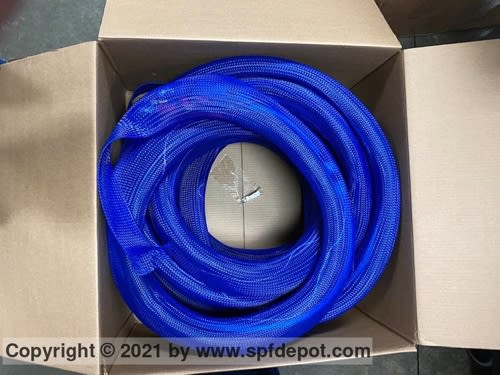
Graco Reactor E02 & E03 Heated Hose Error Codes
One of the most common Reactor service issues is a hose heat fault. Before replacing an expensive heated hose assembly, several simple checks can isolate the problem.
E02 - High Hose Current
An E02 fault indicates excessive current draw in the hose heating circuit.
Possible causes include:
Inspect all hose connectors for burned pins, corrosion, or physical damage.
E03 - No Hose Current
An E03 fault indicates the Reactor is not detecting current flow through the hose heating circuit.
Possible causes include:
Check Hose Continuity
Disconnect power before testing.
Using a digital multimeter, measure continuity through the hose heating circuit.
The heater wire is the black cable approximately the size of a television or cable cord. The heating element forms a continuous loop through the hose assembly to the whip and back.
Results:
Continuity present = heater circuit likely intact
Open circuit = broken connector or failed hose section
Infinite resistance = failed heating circuit
Very low resistance = possible short circuit
Isolate Individual Hose Sections
Most heated hose systems consist of multiple sections.
The first 50 feet usually remains in the trailer and experiences very little abuse. Most hose failures occur further down the hose where it is dragged across concrete, lumber, rebar, and jobsite debris.
Disconnect after the first 50-foot section and test, the connect the next 50' - test. Eventually, you'll test and get your fault code.
This can often isolate a failed hose section without replacing the entire hose assembly.
Check Circuit Breakers
Inspect:
20 amp hose heat breaker
50 amp hose heat breaker
A tripped breaker may indicate a damaged heating circuit or shorted hose section.
Inspect Electrical Connections
Check:
Hose jumper cables
Main hose connectors
Whip hose connections
Burned pins
Loose terminals
Corrosion
Many E02 and E03 faults are caused by poor electrical connections rather than failed hoses. Check the screws on the control boards, I have found some that weren't real loose, but a slight twist with a screwdriver made the difference.
SPF Depot Service Tip
Before purchasing a replacement heated hose assembly:
Test continuity.
Inspect all connectors.
Isolate individual hose sections.
Verify TSU operation.
Many hose heat faults can be repaired without replacing the entire heated hose assembly.