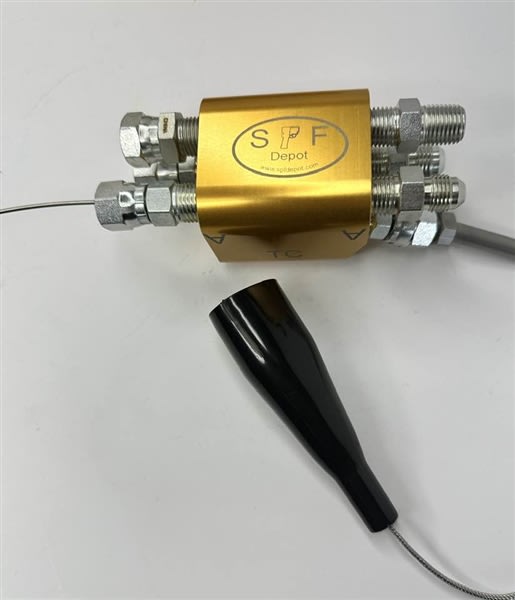
TSU Temperature Sensor Troubleshooting Guide
The TSU (Temperature Sensing Unit) provides hose temperature feedback to the Reactor control system.
A failed TSU can cause hose heat faults, inaccurate temperature readings, and heater shutdowns even when the heated hose itself is functioning properly.
Common Symptoms of a Failed TSU
Hose will not heat
Inaccurate hose temperature readings
Temperature fluctuates unexpectedly
Heater shuts off during operation
Reactor displays thermocouple or FTS related faults
E04 FTS or Thermocouple Not Connected
What Does the TSU Do?
The TSU monitors actual hose temperature and sends that information back to the Reactor control board.
Without a valid temperature signal, the Reactor may disable hose heat to protect the equipment.
Inspect TSU Connections
Before replacing any components:
Check:
Many TSU faults are caused by damaged wiring rather than a failed sensor.
Check Sensor Resistance
Disconnect power before testing.
Using a digital multimeter, measure resistance across the TSU leads.
A functioning TSU will change resistance as temperature changes.
If resistance remains fixed or shows an open circuit, the TSU may be defective.
Always compare readings to the manufacturer's temperature chart.
Quick Diagnostic Test
If a known good TSU is available:
Disconnect the suspect TSU.
Connect the known good TSU.
Power the Reactor ON.
Monitor hose heat operation.
If the fault disappears, replace the original TSU.
Common TSU Failure Causes
Water intrusion
Physical damage
Pinched cables
Corroded connectors
Excessive heat exposure
Age and vibration
TSU vs Heated Hose Failure
A failed TSU can create symptoms similar to:
Always test the TSU before replacing expensive hose assemblies or electrical components.
SPF Depot Service Tip
Many contractors replace hose sections when the actual problem is a failed TSU or damaged TSU connection.
Testing the TSU first can save significant repair costs and reduce downtime.